2026-09-12 ·
How Local Flooding Affects Dumpster Rental Scheduling Near The Kankakee River
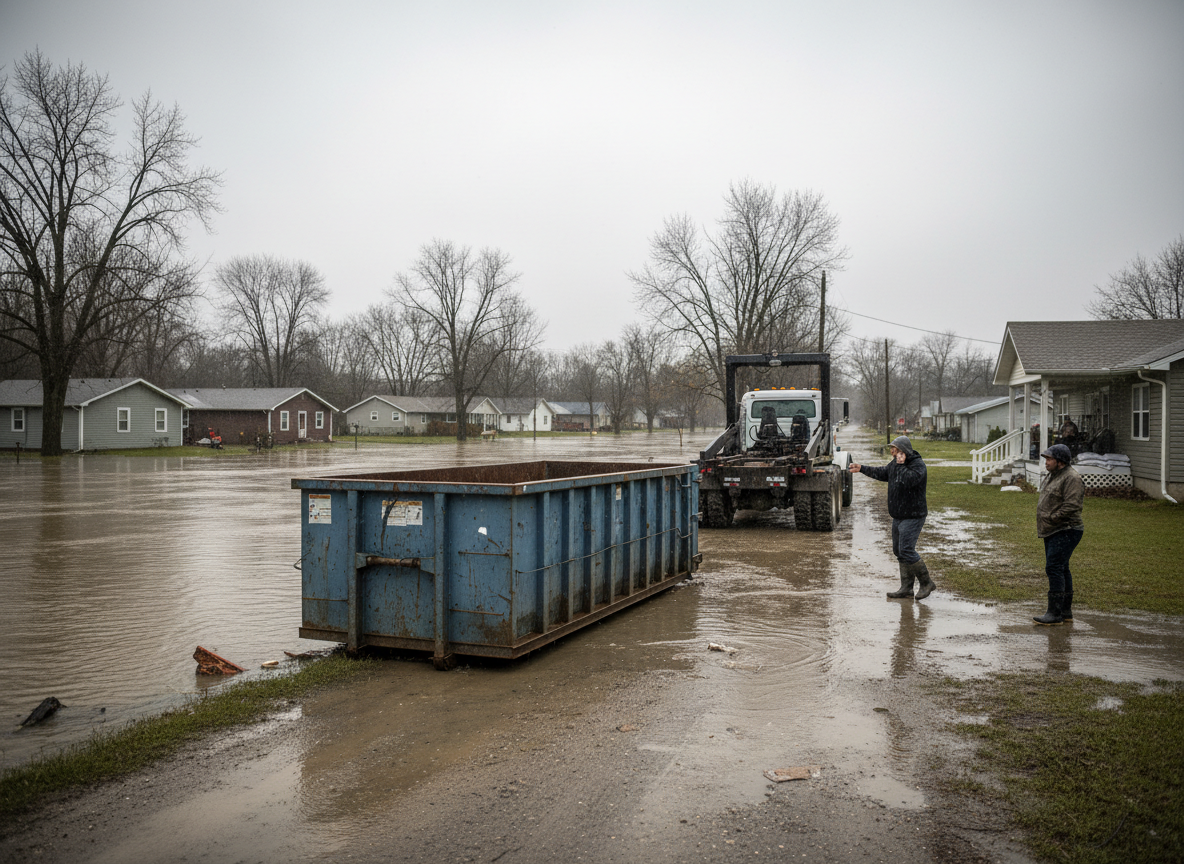
Flooding near the Kankakee River in Kankakee County can push back dumpster rental deliveries and pickups by 3 to 7 days during peak events, as crews must wait for water to recede before safely accessing sites in Pembroke Township. Heavy spring rains combined with snowmelt from the humid continental climate often raise river levels enough to cover low-lying roads and driveways. This forces operators to reroute trucks and verify ground stability before placing any container. Cold winters leave frozen ground that turns to mud once temperatures rise, creating soft spots that cannot support roll-off weight without sinking.
How River Levels Alter Delivery Windows
The Kankakee River runs through low terrain in Kankakee County, and spring runoff regularly spills into adjacent fields and residential edges of Pembroke Township. When river gauges climb above normal stages, access roads near Hopkins Park and Sun River Terrace become impassable for loaded trucks. Operators monitor forecasts daily because a single heavy rain event can add 48 hours or more to planned drop-off times. Soil in these river-adjacent zones holds moisture longer than upland areas, so even after surface water drains, hidden saturation prevents safe placement until crews test firmness. This pattern repeats most years between March and May when cold winter accumulation meets warming temperatures.
Residents planning projects near the river often shift start dates by a full week to avoid these windows. Kankakee County rules for placing a dumpster on your property include elevation checks that become critical during flood season. Trucks carrying 20- or 30-yard containers need firm approaches that many driveways lose once water saturates the clay-heavy soils common here.
Soil Conditions and Placement Challenges
Pembroke Township sits on flat to gently rolling ground where river flooding leaves behind fine silt that turns into deep mud. This material does not drain quickly, so crews often wait until the ground firms enough to bear equipment without rutting driveways or lawns. Hot summer storms can trigger flash flooding that repeats the same access problems, though these events usually clear faster than spring thaws. Winter freezes help by locking soil in place, yet the thaw cycle creates the longest delays. Operators check sites in person rather than relying on maps because small elevation changes near the river determine whether a location stays usable.
When ground remains too soft, rentals get rescheduled to the next available dry window rather than risking stuck vehicles or damaged property. This hands-on verification protects both the customer and the equipment in an area where water tables stay high year-round.
Seasonal Patterns That Affect Pickup Timing
Cold winters slow decomposition of yard debris, so spring cleanups often coincide with rising river levels and create extra demand right when access tightens. Dumpster rental planning for spring yard cleanup in Pembroke Township shows how residents time orders around these overlapping conditions. Once water recedes, crews can usually resume normal 24/7 service, but any remaining soft spots still require extra days before pickup. Nearby Kankakee experiences similar delays along its riverfront sections, giving operators a regional view of which routes open first after each event.
Customers in flood-prone spots benefit from flexible scheduling that accounts for these realities instead of fixed calendars. Monitoring river reports and local rain totals lets both parties adjust without last-minute surprises.
Practical Steps for Reliable Service
Check current river stages and recent rainfall totals before finalizing dates, especially for properties within a mile of the Kankakee River. Provide clear access descriptions when booking so drivers can plan alternate approaches if primary roads are wet. Yard waste dumpster rental helps manage flood debris once conditions allow placement, keeping projects on track despite weather interruptions. Owners who stay in contact with the rental company receive updates on shifting windows and can move containers to higher ground if needed. These steps keep work moving forward even when the river dictates slower timing.